Strawberry vs Mulberry vs Blueberry vs Raspberry | Berry Nutrition Comparison | Benefits of Different Berries | Healthy Berry Guide
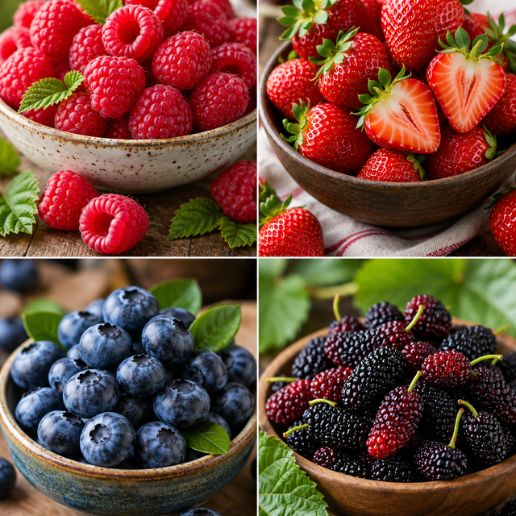
Strawberries, mulberries, blueberries and raspberries are popular berries, each offering a distinct flavour, texture and nutritional profile. While all four provide fibre, vitamins and beneficial plant compounds, their nutrient content and culinary uses vary. Comparing these berries helps you understand their differences and choose the right fruit for smoothies, desserts, breakfast bowls and everyday meals.
- Strawberry vs Blueberry vs Mulberry vs Raspberry
- Berries are small, colourful fruits packed with flavour, fibre, vitamins and beneficial plant
- compounds. From the familiar sweetness of strawberries to the deep colour of blueberries,
- the juicy texture of mulberries and the tangy flavour of raspberries, each berry brings
- something unique to the table. While all four berries can be part of a healthy, balanced diet,
- they differ in their nutritional composition, taste and culinary uses. Understanding these
- differences can help you choose the right berry for your breakfast, snacks, smoothies and
- desserts.
Nutritional Comparison of Berries (per 100 g) -
- Nutrient - Strawberry | Blueberry | Mulberry | Raspberry |
- Calories - 32 kcal | 57 kcal | 43 kcal | 52 kcal |
- Fat - 0.3 g | 0.3 g | 0.4 g | 0.7 g |
- Carbohydrates - 7.7 g | 14.5 g | 9.8 g | 11.9 g |
- Protein - 0.7 g | 0.7 g | 1.4 g | 1.2 g |
- Fibre - 2.0 g | 2.4 g | 1.7 g | 6.5 g |
- 1. Strawberry: The Vitamin C Favourite - Strawberries are known for their bright red colour,
- juicy texture and sweet-tart flavour. They are particularly rich in vitamin C, which supports
- normal immune function and collagen formation. With relatively few calories per 100 g,
- strawberries are a refreshing choice for everyday snacking. They also contain anthocyanins
- and other antioxidant plant compounds that contribute to their nutritional value.
- Best for - Vitamin C intake, light snacks, smoothies, fruit salads and desserts.
- 2. Blueberry - Rich in Colour and Antioxidants - Blueberries are recognised for their deep
- blue-purple colour, mild sweetness and naturally occurring anthocyanins. These plant
- compounds contribute to their antioxidant activity and are an important part of their
- nutritional appeal. They provide dietary fibre and vitamin K, which plays a role in normal
- blood clotting and bone metabolism. Their mildly sweet flavour makes them easy to
- incorporate into everyday meals.
- Best for - Breakfast bowls, oats, yoghurt, smoothies and antioxidant-rich fruit combinations.
- 3. Mulberry: A Naturally Sweet and Versatile Berry - Mulberries come in several varieties,
- including white, red and black, with flavours ranging from mildly sweet to pleasantly tart.
- They provide vitamin C, fibre and various plant compounds, including anthocyanins in
- darker varieties. Mulberries also contain a little more protein per 100 g than the other three
- berries listed here, although all four are relatively low in protein. Their delicate texture
- makes them suitable for eating fresh or adding to homemade recipes.
- Best for - Pancakes, fruit bowls, jams, smoothies and homemade desserts.
- 4. Raspberry: The Fibre Champion - Raspberries stand out for their high dietary fibre
- content. With approximately 6.5 g of fibre per 100 g, they provide considerably more fibre
- than the other three berries in this comparison. Their sweet-tart flavour and delicate
- texture make them a delicious addition to a balanced diet. They also contain vitamin C,
- manganese and antioxidant plant compounds.
- Best for - Increasing fibre intake, breakfast bowls, smoothies, fruit salads and healthy
- homemade treats.
- Health Differences: Which Berry Should You Choose?
- For Vitamin C -
- Strawberries are an excellent choice, offering a substantial amount of vitamin C in a
- relatively low-calorie serving.
- For Dietary Fibre -
- Raspberries are the clear winner, providing the highest fibre content among these four
- berries.
- For Antioxidant Variety -
- Blueberries are particularly well known for their anthocyanins, while strawberries,
- mulberries and raspberries also contain beneficial plant compounds.
- For a Lower-Calorie Snack -
- Strawberries have the lowest calorie content per 100 g in this comparison, making them a
- refreshing choice for a light snack.
- For Versatility in Recipes -
- Mulberries are particularly versatile in sweet preparations, while strawberries, blueberries
- and raspberries work beautifully in breakfast bowls, smoothies and desserts.
- Taste and Texture Differences -
- - Strawberries: Juicy, sweet and slightly tangy, with a soft texture.
- - Blueberries: Mildly sweet, sometimes slightly tart, with a firm skin and juicy centre.
- - Mulberries: Soft and delicate, with a flavour that varies from sweet to mildly tart.
- - Raspberries: Sweet-tart, fragrant and tender, with a distinctive seedy texture.
- Each berry has a different flavour profile, making them suitable for different recipes and
- combinations.
- Strawberries, blueberries, mulberries and raspberries each offer a unique combination of
- flavour and nutrition. Strawberries stand out for vitamin C and their low calorie content,
- blueberries are known for their anthocyanins, mulberries offer a naturally sweet and
- versatile option, and raspberries lead in dietary fibre.
- There is no single berry that is best for everyone. The simplest approach is to enjoy a variety
- of berries according to your taste, availability and dietary needs. Add a handful of berries to
- your next breakfast, snack or dessert and enjoy their natural colour, flavour and nutritional
- goodness.